Wednesday, July 18, 2012

Meeting And Greeting

Proper Greeting For Dogs
​When introducing dogs for the first time it’s important to remain calm and be patient.  One mistake that is often made when introducing two dogs is rushing the process. As humans, we often encounter people that may “rub” us the wrong way and we don’t instantly bond with; it’s the same with dogs, we can’t expect them to be best buddies in a matter of minutes. Making sure that the two meet on neutral ground is important and should help the dogs remain calm and without territorial behaviors. If you know that your dog has a favorite toy or gets grouchy sharing, don’t bring the toy for the initial meeting, as this could ignite a fight. ​Making new friends for your pup can be a fun
and rewarding experience. Dogs can play a role in encouraging friendships and meeting new people. They get people out of the house for exercise and motivate owners to become more involved in rescues and shelters. If a first time introduction doesn’t go as smoothly as you’d like, don’t fret, try again in the future. As an example, when my two
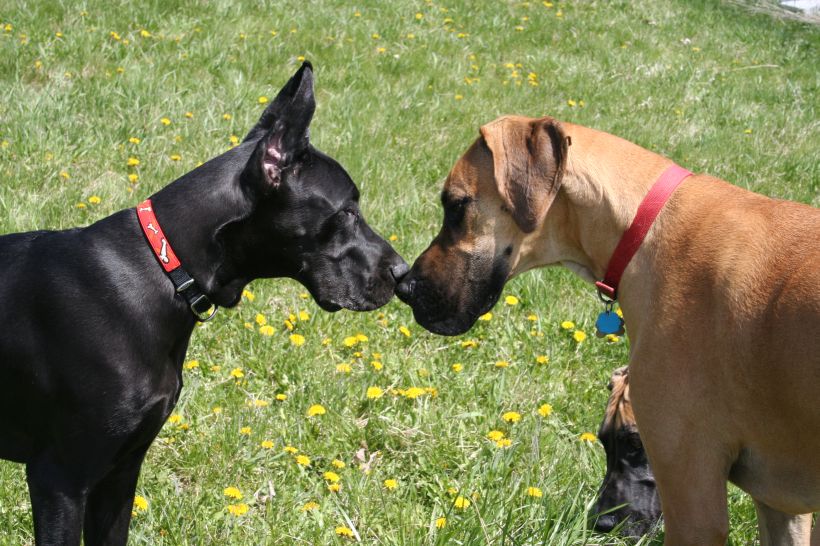
Face-to-Face Greetings can quickly lead to fights between
unknown dogs.
Walking dogs together is a great way for them to socialize in
a controlled environment.
rescues met for the first time, my “gets along with everyone” girl was growling and snapping at the other one.  We ended up taking them outside and walking them together as a pack, while maintaining a safe distance. After a the first night of monitoring their interactions we realized that Millie, our lovable girl wasn’t being aggressive, but was teaching Wonder how to play and interact with another dog. Wonder had spent the last 4 months of his life in a crate at an animal hospital and lacked social interaction with other dogs. When he met Millie, he played like a puppy, biting her ear, and tugging at her. Millie corrected his play by teaching him bite inhibition. They are now best friends and love to play keep away by chasing each other around the house. ​While this is just one example of an introduction, it’s important to know the temperament of each dog. While I knew that Millie was a happy-go- lucky kind of girl who is vocal, not aggressive, Wonder seemed like an eager, crazy wild thing that didn’t understand or respect the social norms when meeting other dogs. Humans often shake hands with a person when they meet for the first time, for dogs this translates into sniffing. It may seem and look silly, but nose to tail is the proper meet and greet. Both should remain on leashes, under the control of their owner. This should take place on neutral territory, if possible, with each dog having an eye on their owner for commands or cues. You never want to put a dog in a situation where they may fail (i.e. a tight space where they can’t escape from the other dog).  After the initial sniff and greet, I highly recommend going for a walk. If the dogs looked relaxed after a while, ears back, looking around, rather than staring down other dog, you can try to walk the two side by side, while both leashed and you in control.  Slow increments of exposure go a long way in developing trust with the new dog, and in the owner. Another thing to remember is that when you’re walking with your pup and you see a loose dog, or an owner that wants their dog to play with yours, feel free to say “no”, or say “we’re in training right now”.  As a dog owner it is your responsibility to speak up for you dog, to tell the other (sometimes insistent) owner to back off and not engage in dog play. I know that I’ve been in some sticky situations with my pups, and telling someone else that your dog doesn’t play well with others may feel embarrassing or shameful, but in the end you are making the right decision by protecting and speaking up for you dog, who may not be ready to face the world. -K Paige

Wednesday, June 27, 2012

4th of July and your Pup


The fourth is upon us!  We are approaching our country's 236th birthday of independence!  This is a time of celebration, food, family, and fun.  However, when you factor in the stress, excitement, and high anxiety of friend and family barbecues along with the sight and noise of fireworks, you may find yourself with a problematic pup.  Fireworks and pets just don't mix in a normal environment.  If your dog is not desensitized to loud noises, as a therapy or working dog might be for example, then it is probably best to leave him home during the festivities.


Prevention and Desensitizing:
Dogs are typically not use to the sound and disruption of fireworks. It can cause anxiety levels to skyrocket and segway into further behavior problems.  This stress can cause stomach issues, timidness, helplessness, separation anxiety, or fear-aggression.  If you have noticed your dog is sensitive to loud noises and flashing lights, try desensitizing them to this prior to the fourth. Start with playing a recording of fireworks at a low volume. Do normal fun activities with your dog, during the playback. Gradually raise the volume while treating, training and playtime. If you notice the dog withdrawing, reduce the volume until he is comfortable and begin again.

Food and Family:
I'm sure some of your guests are NOT dog people. All they know of dogs is fun and treats, or licks and rubs. Keep your pup safe from ingesting dangerous food or inedible products (ie. wooden skewers, bones, plastic ware, poisonous food).  Remember, it's not only chocolate that is harmful to dogs (i.e. onions, garlic, avocado, grapes, etc.)  It's like Christmas to your pup, with all the food around, and unmonitored plates. Before you know it your food has spontaneously disappeared, and you may be off to the emergency vet.  Be mindful of your barbecue.  You don't want to be tending to burns as well.

Flight from Fear:
This time of year has one of the highest rates of lost pets. Make sure you have your dog tagged and/or microchipped and secured in a quiet safe place. Fear of the noise may cause your dog to flee or hide. If they are loose, they could potentially run into a high traffic area or get lost by running too far from home.  Want an easy prevention?  Keep your dog at home in a safe quiet room, with the TV or radio on to provide a comfortable noise-distraction, and avoid the festivities all together.

The tips above are brief and summarized. Each dog possesses a different personality and will not theoretically react the same way. Please consult with us about your dog, and situation and we will assist you to ensure a safe and happy Fourth!

Back in the Pack
www.backinthepack.com

Friday, May 25, 2012

You CAN Teach an Old Dog New Tricks!

As we grow as dog owners, so does our knowledge of the pets we keep. We get comfortable, and honestly believe we know all there is to know about our furry friend and companion. Little do we know, we have often either catered to our pets' misbehaviors, caused the problem behaviors ourselves, or merely avoided a solution altogether and settled with the outcome. Here are a few common misconceptions about dog behavior I have heard in the past:

MYTH #1: Feeding Dogs People Food Encourages Begging

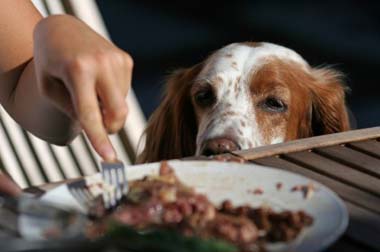
Actually, it isn't the food itself that causes begging behavior. In fact, many of our foods are quite healthy and nutritious for dogs. Some vets will encourage a diet of vegetables or rice to help combat obesity or improve digestion, and others will feed raw meat and vegetables to their pets. It is feeding your pet while you are eating that causes the begging behavior. If your pups are eating snacks off the dinner table or catching popcorn on movie night, why shouldn't they expect that kind of service to be continued at all times? "Demand" barking, howling, and excessive drooling can be very annoying at family dinners or when guests come over. It may even disturb that fun movie night, or wreak havoc on a formal dinner party. So we just lock our dogs up, right? Wrong. We must train them to respect our space, and eat when we say they can-- not when they think they deserve it. They should be comfortable and preoccupied when you eat, enjoying a toy, or lying peacefully in a separate room while you enjoy your dinner or snack.
MYTH #2: Dogs Eat Grass When They Need to Vomit

Yes and No. Dogs eat their vegetables, too! Dogs are scavengers; like us, they eat both meat and vegetable. In their earlier, less domesticated days, as they ate the stomach contents of their herbivore prey, dogs also ingested the grasses that the prey had eaten. This was a dietary necessity. Our domesticated dog has a deep-seeded need for these nutrients, as well. Many dogs will graze on grass when out for a walk, craving a nutrient not provided in their dry cereal. Some do it out of boredom -- just as we do with our snacks. We aren't necessarily hungry, but it's there. Why not eat it? Sometimes, however, dogs will use grass to cause regurgitation when they are gassy, or have an upset stomach. They have learned it will tickle their throats, irritate their stomach linings, and induce vomiting -- so it's not always a bad thing. Just always be aware of the grass your dogs are eating, to ensure pesticides or other harmful products have not been added. 
MYTH #3: You Can't Teach an Old Dog New Tricks

Oh, you can -- but you tell me how easy it is to teach Grandma how to use that new Playstation you got for Christmas. Dogs are like people in that sense. The older they get, the more stubborn and "set in their ways" they can become. It is still possible to teach them new behaviors, or rehabilitate behaviors they may already have, but it will take more patience, time, and stimuli to do so.  Puppies and younger dogs are active, reward-motivated, and eager to please. As dogs age, some just want to be left alone, and some have been catered to with a silver spoon. Why should they budge for treats when the butler (you!) will tend to their needs as soon as they call? The key to training an older dog is finding out what stimuli will work on it.  What makes the dog tick? What still brings a light to his/her eyes and puts pep in his step? Those are the tools you will need to train.
MYTH #4: A Wagging Tail Means a Happy, Friendly Dog

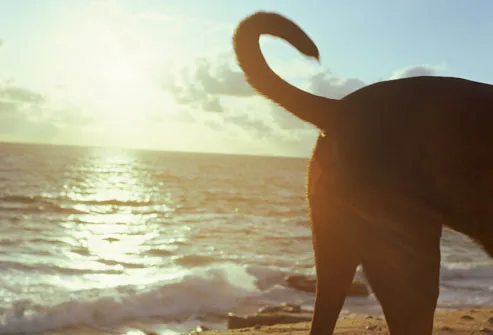
Sometimes, yes. In fact, most times, yes.  Your dog's tail is a window into his mind; it can demonstrate when a dog is excited, agitated, fearful, tense, anxious, and more. For this reason, the tail is one of the most important forms of communication from dogs to humans. Educate yourself on social cues between dopes to determine what your dog is trying to say. For example: A high, erect wagging tail may be a sign of dominance or aggression, while a low, tucked wagging tail may display fear or submission. Either of these can lead to a fight-- or a flight -- by your dog.
For more information or answers about your dog's behavior (or other common misconceptions), "like" us on Facebook, or feel free contact Back in the Pack directly at http://www.backinthepack.com.Fppy Training!HaDari FergusonnerBack in the PaOwner/Head Traick

Our Silent Heroes

This Memorial Day, while we barbecue, spend time with family, and enjoy the beach, don't forget to honor the military men, women, and military dogs who have given their life to defend our country.


War dogs have silently fought for us for decades many not returning from the field. I'd like to honor those who have fallen, as many do not realize how much their hard work and dedication has influenced our military. In 2000, Clinton passed a law to allow these dogs to be adopted. Since then military dog adoptions have gradually risen. These dogs may have behavior problems(ie. post traumatic stress disorder) or missing limbs, but in no way are less worthy of a happy retirement.

To learn more about these incredible heroes and their stories or to learn about how to adopt and/or support retired war dogs, visit USWarDogs.org or Military Working Dog Adoptions.

Thursday, May 10, 2012

FYI: Pet Food Recall -Salmonella

Here’s an easy to read bulleted version of the pet food recall. It’s quite a list….


Attention All Pet Parents!

A voluntary recall has been issued for several brands of dry pet food due to the potential for Salmonella.


Taste of the Wild (Cat and Dog)
Chicken Soup for the Pet Lover's Soul (Cat and Dog)
Natural Balance Vegetarian
Natural Balance Lamb & Brown Rice
Natural Balance Sweet Potato & Bison
Natural Balance Sweet Potato & Venison
Wellness Large Breed Puppy
Canidae Dog, All Life Stages
Canidae Dog, Chicken Meal & Rice
Canidae Dog, Lamb Meal & Rice
Canidae Dog, Platinum
Solid Gold WolfCub Large Breed Puppy
Solid Gold WolfKing Large Breed Adult
Country Value
Diamond
Diamond Naturals
Premium Edge
Professional
4Health
Kirkland Signature

Pet owners who are unsure if the product they have purchased is included in the recall, contact the manufacturers directly:

Diamond Pet Foods
Customer service: 1-866-918-8756 or visit www.diamondpetrecall.com

Natural Balance
Customer Service: 1-800-829-4493 or visit www.naturalbalanceinc.com

Wellness
Customer Service: 1-800-225-0904

Canidae
Customer Service: 1-800-398-1600

Solid Gold
Customer Service: 1-800-364-4863

Salmonella can be transferred from pets to humans. Symptoms include:

Nausea
Vomiting
Abdominal pain
Diarrhea
Fever
Chills
Headache
Muscle pains
Blood in the stool

If you are experiencing these symptoms please consult a physician for medical care.

DJF

Tuesday, May 1, 2012

A Pup That Loves Too Much

Separation anxiety (SA) is a common behavior problem that I have experienced with my clients.  It is a widely known reason for many owners to give up on their pets, albeit re-homed or turned into shelters and rescues.  However, SA does not have to be a reason to give up on your pet, it can be treated through behavior modification and or medication.

What is Separation Anxiety?
Your dog most likely sleeps, barks occasionally at outside noises, wanders the house, or chews on his toys while you are away.  This is normal.  Others who experience separation anxiety may bark incessantly, chew on furniture or drywall, destroy personal items, or urinate and deficate in the house. This is not normal.  Some are in such a state of fear and anxiety that while in a crate, they break nails off, cause bodily injury to the themselves, or drool so terribly that when you return they are literally standing in a pool of saliva.

Causes of Separation Anxiety?
There can be several underlying reasons why a dog may have separation anxiety.  First, dogs are pack animals.  Thousands of years of evolution has developed their highly social nature and engrained them to stay with their pack.  You may have an issue with dominance, where the dog can not possibly believe that his pack has left him.  He may claw at an exit or entry way until you return trying to find a way back to his/her pack.  Another cause may be actual fear.  Something may have scared the dog previously (ie. thunderstorm, natural disaster, burglary, etc.)  The thought of being alone without the security of his pack is terrifying, so in turn he tries to escape any way possible. If a dog has been taken from his  canine pack too early and is very dependent on humans than he may wonder how he will survive without.  So in his head he has to get back to you. There are many different scenarios that can cause SA. The key is recognizing it and helping the dog gain confidence and overcoming his/her fears.


Solutions to SA?
This article in no way will give you a definitive solution to SA. Consult a behaviorist and/or a vet and determine if there is a medical condition or if it is a behavior problem.  A way to aid in their rehabilitation is to start out making your arrival and departure very unexciting.  Don't make a big deal out of coming and going.  Also, change your routine to leaving.  SA can start with something as simple as grabbing your keys or putting your coat on. Practice doing these things in small time intervals, making the departures and the returns short.  Gradually increase time intervals.

  Try giving them something to do.  Leave a toy or mental stimulation for them.  There are many products our there with food puzzles and fillable chew toys, or a simple bone might do the trick.  This will keep them occupied while you are away.  Exercising them before you go is also a good way to prevent SA.  A tired dog is a happy dog.  Feed your dog before you leave, or provide a snack.  Dogs tend do get a little more nervous when they are hungry.  You can also leave a radio or tv on. I tend to turn one on in a different room, so the dog may think someone is home with them.  There is not an overnight cure or solution to SA.  It is a process that has to be consistently worked-out.  Once you find the root cause of the anxiety and a positive solution response (however small), you will be on your way to re-associating and stabilizing your pack.

DJF
www.backinthepack.com


Tuesday, March 20, 2012

Pups on the Move

As I prepare to move into a new residence, I wanted to share with you the emotional roller-coaster that moving can be for your dog as well.

Moving in itself can be a stressfull project. It can also be a time of cleansing and reorganizing. We get a chance to throw out old and unused items, we find items we had thought were lost and we begin to organize our disarray. Our pups look at this situation as change. Change is terrifying for most dogs. Most dogs are not naturally use to change. They are creatures of habit, and we are about to uplift them from their comfort zone. In doing this, one can experience behavior problems. Separation anxiety, excessive panting, drooling, or drinking of water, pacing, destruction, chewing, digging, defication or urination in the home, loss of appetite and loose stool are all examples of what you may experience with change. The best way to prevent or keep these behaviors from revealing themselves is to keep routines and habits as normal as possible.

Keep exercise routines in place: daily walks or runs will help keep the energy level low and prevent anxieties from building up. Don't just substitute with backyard playtime. They need their workout too, even if you are exhausted from the move.

Feedings and bathroom breaks: If you have them on a regular feeding schedule, keep the schedule as constant as you can. Don't overfeed or offer more water. They will most likely want to drink more, but that will only encourage more bathroom breaks.

Immediately start consistent routine in your new home: Show your dog the exit and entry points in the new house.  It may have multiple entry ways, so make sure your dog knows the bathroom exits and keep it consistent.  Also, begin to set exactly where you want their things like toys, beds, food and water bowls, crates, etc..  You want to avoid moving things around too much.  Your dog needs to know where his things are and where a good place is for them to settle away from the commotion.

Training training training! Take a break from moving and spend a little time with your dog training. This will mentally exhaust them and keep them a little calmer during the process.  When you keep the bond of training going through a move, it helps offset things that may lead to separation anxiety and other unwanted behaviors.

Keep them away from the hustle and bustle: There are going to be a lot people coming and going during the actual move out/move in. Keep your dogs safe and secure and away from the commotion. Play a radio or tv so they don't hear as much of the activity, this will help to keep the anxiety at bay as well.

I hope these tips help out in any future moves you may have. These tips also will help with vacations or pet sitting. Change does not always have to be a bad thing, but it can be scary and ALOTof work. Happy Training!

dJf